Edgar Farrow
Washington BlackEdgar Farrow, the acting sexton of St. John’s parish in Virginia and an associate of James Wilde at the Royal Society, is both a scholar of human decay and a participant in a network assisting fugitives from slavery. He first appears as a stranger who offers shelter to Christopher Wilde and Washington Black; beneath his eccentric, unsettling pursuits, Washington later learns, lies a record of consequential aid to other people seeking freedom.
Identity and Background
Farrow serves as acting sexton of St. John’s parish, about ten miles west of Norfolk, in the countryside along the Elizabeth River. His connection to the Wilde family is intellectual as well as institutional: he began as James Wilde’s associate at the Royal Society, and Christopher has corresponded with him for several years. Their letters concern pressure shifts during balloon ascents and their effects on the human body, a subject that establishes Farrow as a fellow investigator rather than a merely formal contact. Christopher describes Farrow as a necropsocist, a scholar concerned with the processes and conditions of human decay. This specialty makes his living quarters and parish office unsettling to Washington, but the narrative does not reduce Farrow to his disturbing interests. The contrast between his scholarly preoccupations and the help he offers to people in danger becomes central to how Washington remembers him.
Meeting Washington and Christopher
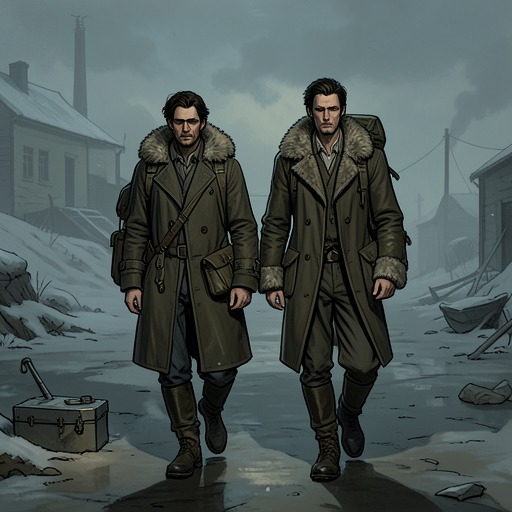
When Christopher and Washington reach St. John’s, Farrow is walking among the graves. He initially mistakes them for people seeking to buy something, yet offers them shelter for the night. Christopher identifies himself by the correspondence Farrow knows: he is Christopher Wilde, James Wilde’s son, and the writer with whom Farrow has discussed aerostatic pressure and its effects on the body. Farrow recognizes him in person, welcomes the connection, and asks after the Cloud-cutter. Inside Farrow’s quarters, Washington notices the dark, closed room and the smell associated with the sexton’s work. In the office, he sees a preserved severed arm displayed in a brass basin, with a small metallic object inserted into the thumb. Christopher identifies it as an arm. The scene introduces Farrow through Washington’s wary perspective, making his scholarship appear uncanny before the story reveals its other dimension: his willingness to shelter people whose lives are threatened.
Assistance to Fugitives
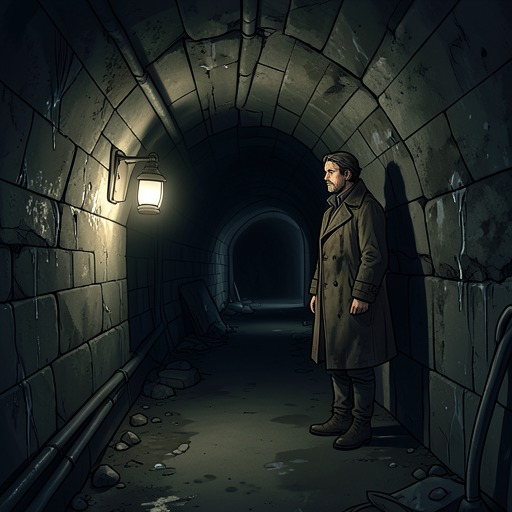
Farrow’s assistance extends beyond lodging Christopher and Washington. In a low underground chamber, Washington finds Farrow and Christopher with two runaway enslaved men, Adam and Ezekiel. The men are preparing to leave the following night. Christopher says they will reach the North before the month is out; Farrow clarifies the legal significance of their destination, explaining that an enslaved person who reaches Upper Canada will be freed upon arrival. Farrow’s role places him within an active route of escape, not simply in private sympathy with the fugitives. The shelter and the underground meeting connect his parish work to practical resistance against slavery. His help is especially significant in the context of Washington’s own insecure position: he has escaped Faith Plantation, but remains vulnerable to capture, and a reward notice names him as a fugitive to be seized dead or alive. Farrow’s actions therefore stand against a system that continues to claim authority over people beyond the plantation.
Character and Significance
Washington’s first impression of Farrow is shaped by the disquieting setting and evidence of his research. His later judgment is more capacious. Years afterward, Christopher asks Washington whether he remembers Farrow and tells him that Farrow is dead. Washington recalls the man’s kindness and notes that it bore no correlation to his darker, unsavoury hobbies. Christopher adds that Farrow had been ill, though he had seemed physically capable the last time they met, and calls him a great man for all he did for people. Farrow’s importance lies in the conjunction of these traits rather than in a simple transformation from eccentric scholar to benefactor. The narrative preserves both: his unsettling investigation of bodily decay and his concrete support for fugitives. His death reaches Washington through Christopher’s recollection, closing Farrow’s part in the plot while keeping his actions present in the story’s account of people who make freedom materially possible.